
Masonry & Hardscaping
Patios laid on a base built for a winter here
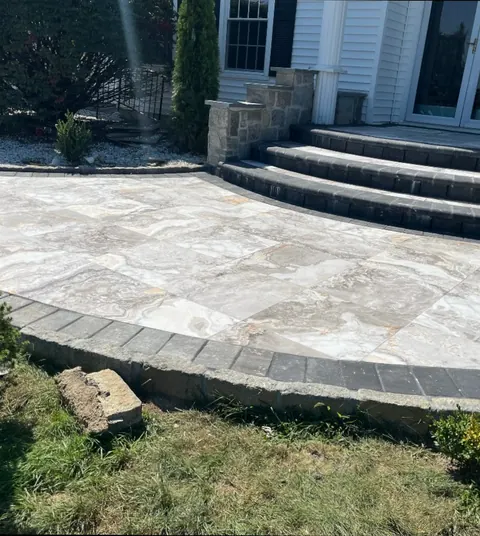
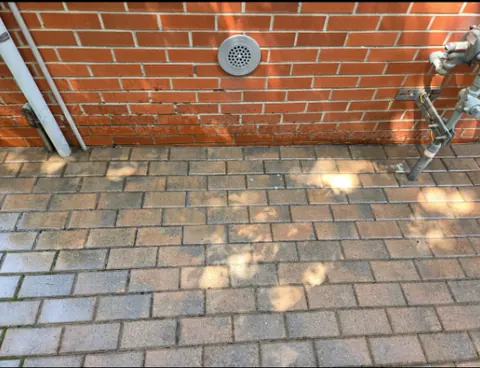
Bluestone, flagstone and interlocking pavers, laid on a base built for a Hudson Valley winter rather than for a photograph.
The problem
You want an outdoor room you will actually use — or you have a patio that has settled, heaved, grown weeds through every joint, or sends water back toward the house.
The visible difference between a good patio and a bad one shows up in the third winter. This region runs through dozens of freeze-thaw cycles a year: water gets into the base, expands as it freezes, lifts whatever is on top of it, and lets it down somewhere slightly different. Do that forty times and a patio laid on thin or unconsolidated fill is no longer flat.
What prevents it is unglamorous. Excavation deep enough for a real base — more on the clay-heavy, slow-draining soils that are common east of the Hudson — crushed stone compacted in lifts of a few inches at a time rather than dumped and rolled once, a bedding course held to a consistent depth, and pitch. Every patio is built with a fall of about an eighth of an inch per foot away from the house. It is imperceptible underfoot and it is the whole difference between water leaving and water pooling at the foundation.
Then the material, which is the part you get to choose on taste. Bluestone reads as the Hudson Valley because it is from here. Interlocking concrete pavers cost less, come in more patterns, and are far easier to lift and reset if a utility ever has to be dug up. Flagstone is the most irregular and the most work to set well. We will price whichever you like and tell you plainly where each one is a compromise.
What the work includes
- Interlocking concrete paver patios
- Natural bluestone patios
- Flagstone and irregular stone patios
- Porcelain paver patios
- Custom pattern and border layouts
- Integrated seating walls, steps and landings
- Lifting and resetting settled or heaved patios
What you end up with
A level, well-drained outdoor room that stays level — and a joint pattern that does not turn into a weed bed by the second summer.
How long it takes
A straightforward 300–500 sq ft patio is about a week. Add steps, a seating wall or a fire feature and it is two. Excavation is the variable: wet spring ground and buried rock both add days, and neither is visible when the estimate is written.
Stone & Paver Patios we've built
Photographs from our own jobs.
Where we do stone & paver patios
Across Putnam and northern Westchester County. The ground is not the same in all four of these towns and it changes how this work gets built — each page says what changes there.
Usually goes with
These three come up on the same properties often enough that it is worth pricing them together rather than twice.
Get a stone & paver patios estimate
Tell us what you are trying to do and we will come and look at it. Free written estimates, no obligation.