
Masonry & Hardscaping
Driveways and walks that carry the load and shed the water
Paver, blacktop, concrete and natural stone — the surfaces that carry the most weight and get looked at first.
The problem
Your driveway is cracked, sunken, or pushing water at the garage; or the walk to your front door is uneven, unlit and the first thing anyone sees.
A driveway is a structure carrying repeated point loads from vehicles, in a climate that freezes it and thaws it forty-odd times a year, usually on a slope. It fails at the edges first, then in the wheel tracks, then at whatever low point the water found. Almost always the failure traces back to base depth and to where the water was allowed to go.
So the process is: strip out the old material rather than paving over it, establish the grade the surface will actually drain on, build and compact a base sized for vehicles rather than for feet, and finish to spec. Where a driveway pitches toward a garage or a house — common here, on properties cut into a hill — that gets solved with a trench drain or a regrade before the surface goes down, because no surface material fixes a grade problem.
Walkways are a smaller version of the same work with one addition: they are the piece of the property a visitor walks on, at night, in winter. Consistent riser heights on steps, a width that lets two people pass, and a surface that is not glass when it is wet all matter more than the pattern.
What the work includes
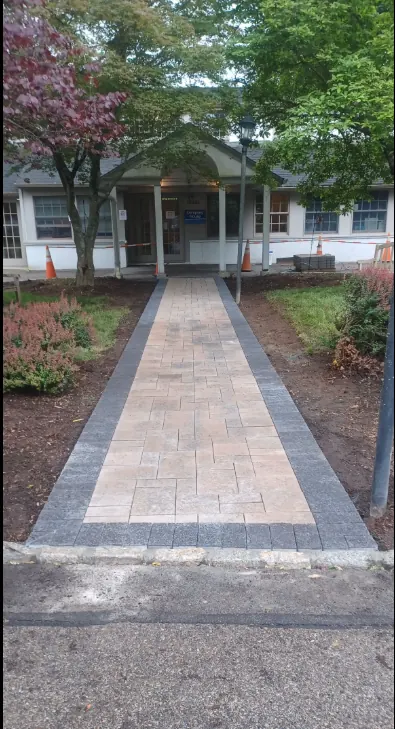
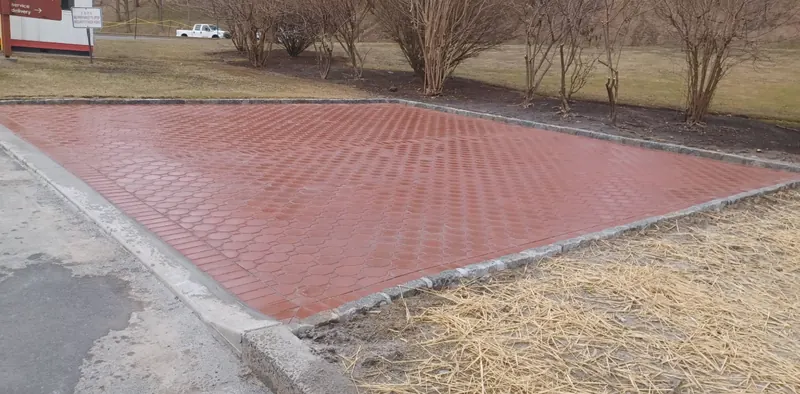
- Interlocking paver driveways and aprons
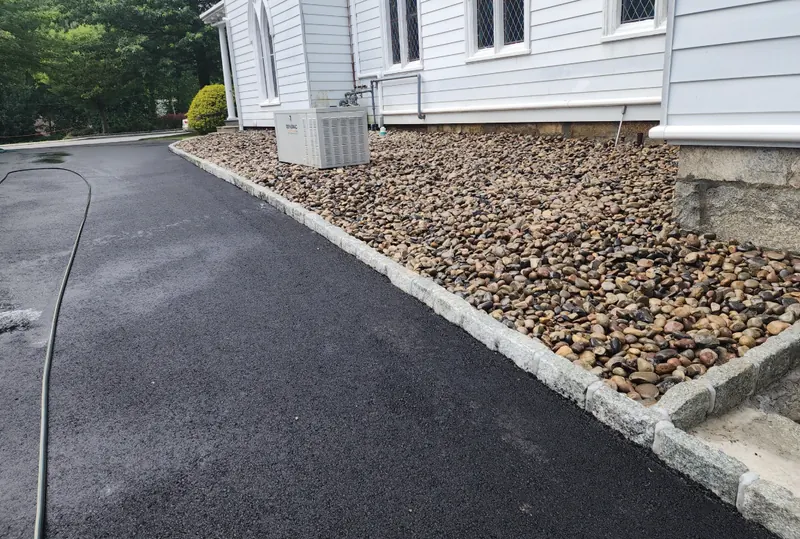
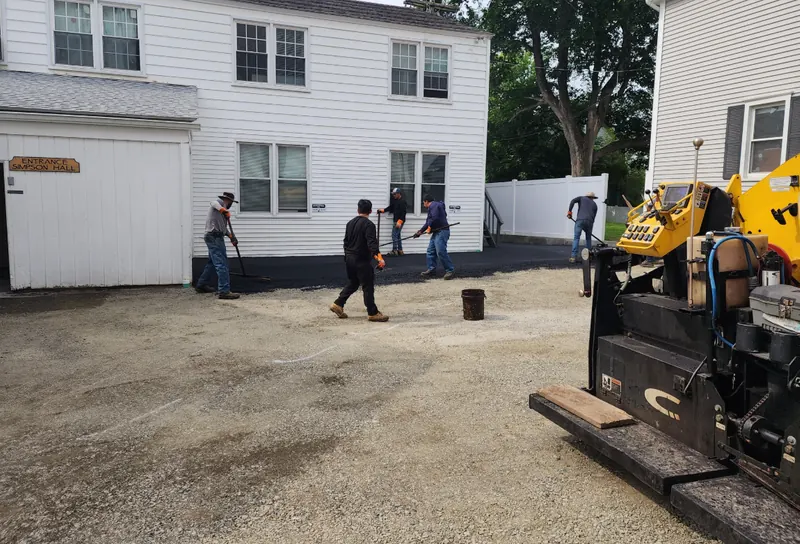
- Blacktop and asphalt driveways
- Poured concrete driveways
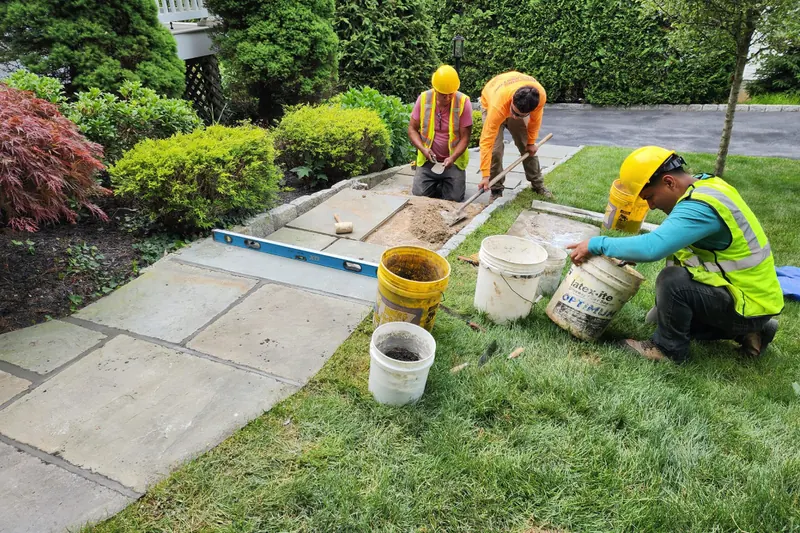
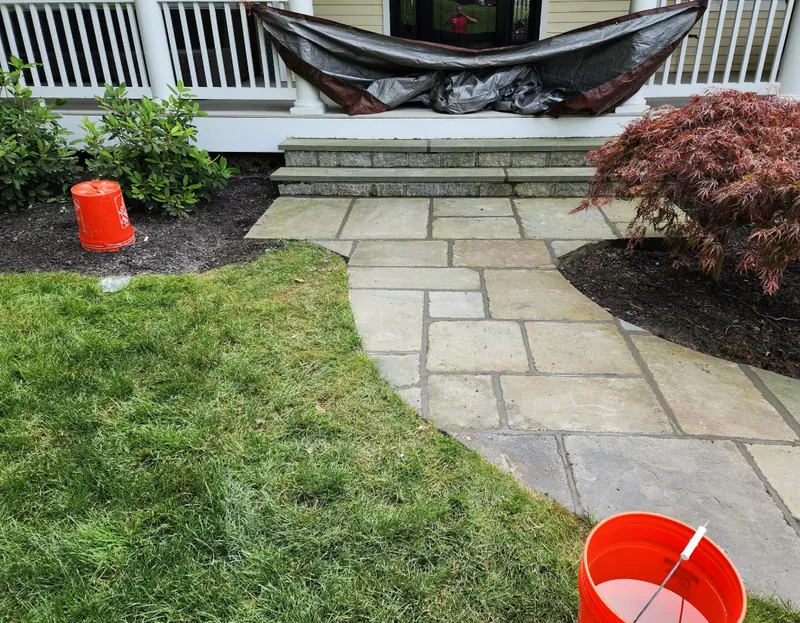
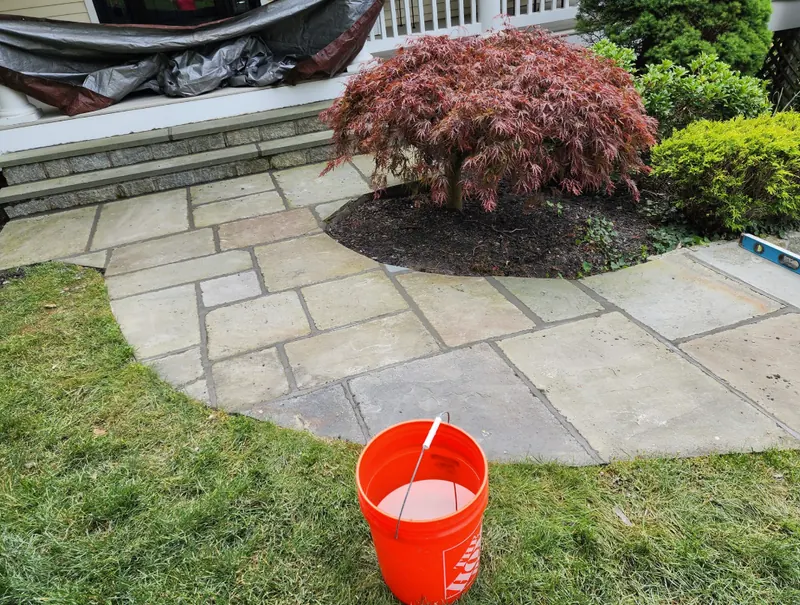
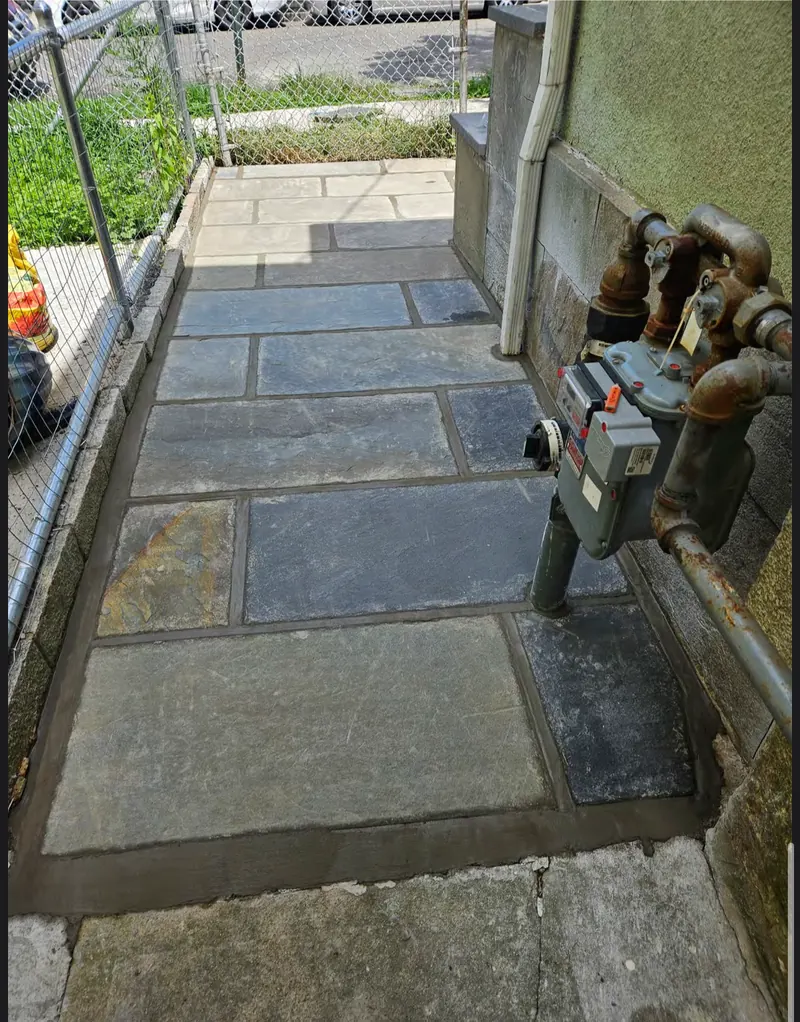
- Natural stone and bluestone walkways
- Decorative entry paths and landings
- Granite cobble and Belgian block borders and edging
- Tear-out, regrading and drainage correction
What you end up with
A surface that carries the load, sheds water away from the building, and holds its edge instead of crumbling into the lawn.
How long it takes
A residential blacktop driveway is two to four days. Pavers on the same footprint are one to two weeks, because the base work is heavier and every piece is set individually. Concrete needs its cure time before vehicles — usually seven days, and that is not negotiable however dry it looks.
Walkways & Driveways we've built
Photographs from our own jobs.
Where we do walkways & driveways
Across Putnam and northern Westchester County. The ground is not the same in all four of these towns and it changes how this work gets built — each page says what changes there.
Usually goes with
These three come up on the same properties often enough that it is worth pricing them together rather than twice.
Get a walkways & driveways estimate
Tell us what you are trying to do and we will come and look at it. Free written estimates, no obligation.